What sources are the articles on this site based on?
The primary source used here is the Sirat Rasul Allah by Ibn Ishaq / Ibn Hisham. The English translation by Alfred Guillaume is widely known and recognized as the clearest account of the words and actions of Muhammad.
Are the sources reliable?
This website assumes that the Islamic sources are reliable. Other online resources specialize in historical and archaeological research about the origin of Islam and its scriptures. You are encouraged to go there for analysis and discussions.
Are there multimedia resources here?
Sorry, no: This website focuses on the original material, which is text. Each article has just one image reflecting the content. We aim to make the original stories as easy to read as possible. So text, no more, no less. For video documentaries and other multimedia material, there are plenty other recourses out there.
What are the sources used?
Below are the six main sources that cover the life and context of the Islamic prophet Muhammad. Apart from the Sirat, there is the extensive work by Al-Tabari, the canonical hadith collections, and of course the Quran and related commentary.
Sirat – The Life of Muhammad
In this well known biography, the life of Muhammad from genealogy, childhood, life in Mecca, the Hijra to Medina, the establishment of Islamic rule, and his last days.
The book is a reconstruction of the original work by Ibn Ishaq / Ibn Hisham, which unfortunately has been lost to history. It remains the definitive biography of the founder of Islam.
This work is not merely of historical interest: Because Islamic law (Sharia) is based on the sayings and deeds of Muhammad, this work is a source of Islamic law even today.

A comprehensive account of early Islamic history was compiled by al-Tabari, (839-923 AD). This work also includes stories preceding Muhammad, and extensive accounts of the following years, the rapid expansion of Islamic rule and establishment of a wholly new empire.
The entire work of al-Tabari can be read online at Kalamullah.com.
Sahih al-Bukhari is the foremost hadith collection of Sunni Islam. Compiled by Islamic scholar al-Bukhari (d. 870 CE) in the musannaf format, the work is valued by Sunni Muslims alongside Sahih Muslim as the most authentic piece of Islamic text after the Qur’an.
The full hadith collection of Bukhari can be read online at Sunnah.com.


Compiled by Islamic scholar Muslim ibn al-Hajjaj (d. 875) in the musannaf format, this hadith collection is valued by Sunnis, alongside Sahih al-Bukhari, as the most important source for Islamic religion after the Qur’an.
The full hadith collection of Sahih Muslim can be read online at Sunnah.com.
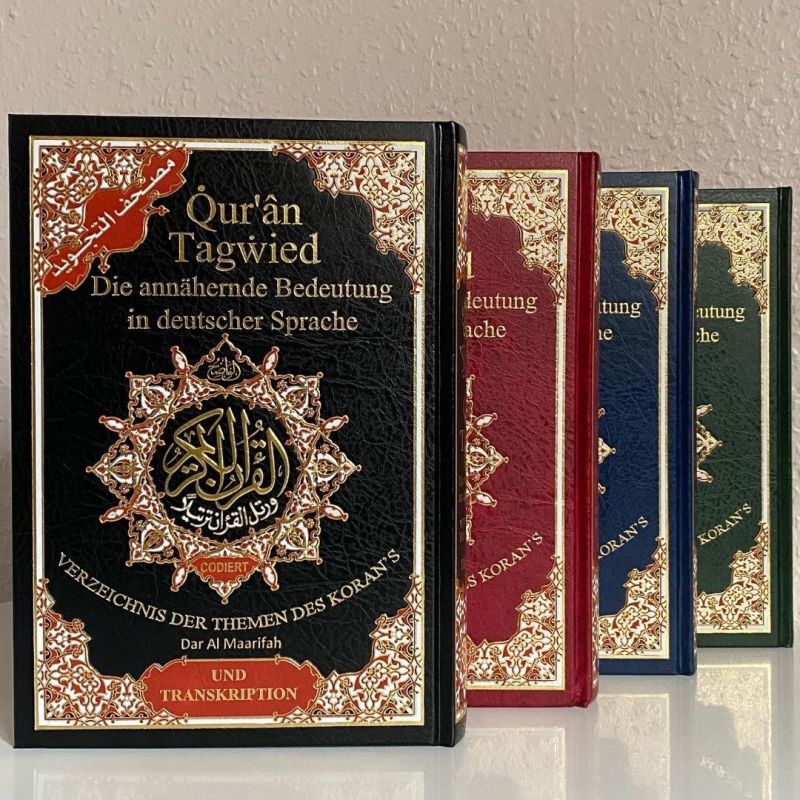
The Quran is the central religious text of Islam, believed by Muslims to be a revelation directly from God.
There are several translations into English. One of the best known, The Noble Quran, can be read in full for free at www.thenoblequran.com.

Ibn Kathir (c. 1300 – 1373 AD), was an Arab Islamic historian and scholar. An expert on Quran commentary, Islamic jurisprudence, he is considered a leading authority on Sunni Islam.
His tafsir (Quranic commentary) is widely recognized and used as a reliable interpretation of each verse in the Quran actually means.
The full commentary of Ibn Kathir can be read for free at WordOfAllah.com.
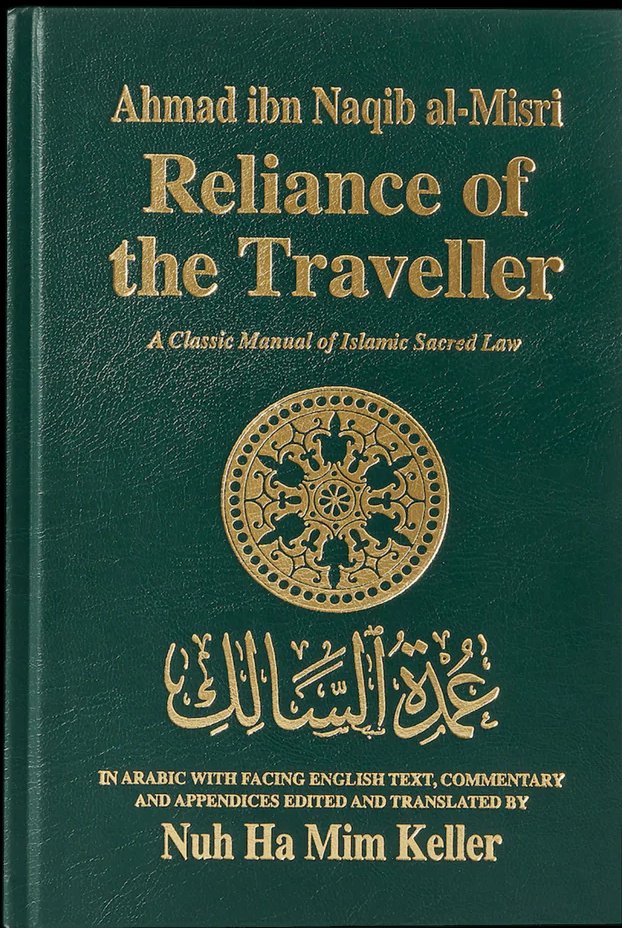
Reliance of the Traveller is a classical manual of Sharia, Islamic law, which uses as its source of law the sayings and actions of Muhammad.
This work is authored by Ahmad ibn Naqib al-Misri (AD 1302–1367). Based on the Shafii traditions, this work also accounts for the Sunni legal traditions, Hanafi, Hanbali and Maliki.
As recently as 1991, Reliance of the Traveller became the first standard Islamic legal reference to be translated into English, to be certified by Al-Azhar University in Egypt.
Reliance of the Traveller is not available online, but can be bought from IslamicBookstore.com.